
Empathy in Senior Care: Supporting Emotional Needs
Navigating the transition from independence to care for seniors is an emotional journey. Discover how empathy and emotional support can ease grief in caregiving and enhance the quality of senior care.
CAREGIVERHOME CAREEMOTIONSDEPENDENCYTIPS FOR CAREGIVER
3/14/20261 min read
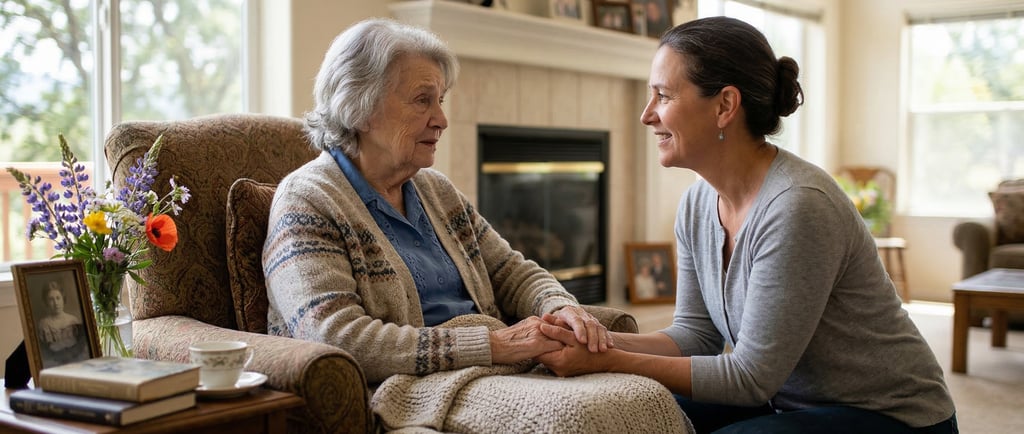
Following are some of the tips for managing emotional shift for your loved ones:
Validate, Don’t "Fix": When your loved one expresses anger about needing help with a simple task like getting dressed, avoid the urge to say, "It’s not a big deal." Instead, try: "I can see how frustrating it is to feel rushed. It’s okay to be upset about this." Acknowledging their reality prevents them from feeling isolated in their grief.
Empower Through Micro-Choices: Dependency feels like a total loss of control. Counteract this by offering choices in their daily routine. Instead of saying, "It’s time for lunch," try: "Would you prefer to eat in the kitchen or by the window today?" or "Should we go for a short walk before or after your tea?" These small wins restore a sense of agency.
Decouple Identity from Ability: Remind them that their value isn't tied to their physical output. If they can no longer garden, bring the plants to them or ask for their expert advice on which flowers to buy. Use phrases like, "I still need your eye for detail on this," to reinforce that their wisdom is still vital.
Practice Patient Listening: Sometimes, a "difficult" attitude is just a mask for fear of the future. Create space for them to talk about their past and their worries without judgment. Simply sitting with them in silence or looking through old photos can bridge the emotional gap.
Managing these complex emotions while balancing your own life can quickly lead to burnout. This is where professional home care provides a necessary buffer.
Experienced caregivers are trained in de-escalation techniques and "redirection"—shifting a loved one’s focus from a point of frustration to a positive activity without causing a power struggle. By bringing in a professional, you shift from being a "task manager" back to being a family member. This allows you to focus on the relationship and quality time, while the expert handles the intricacies of daily care with objective, compassionate grace.