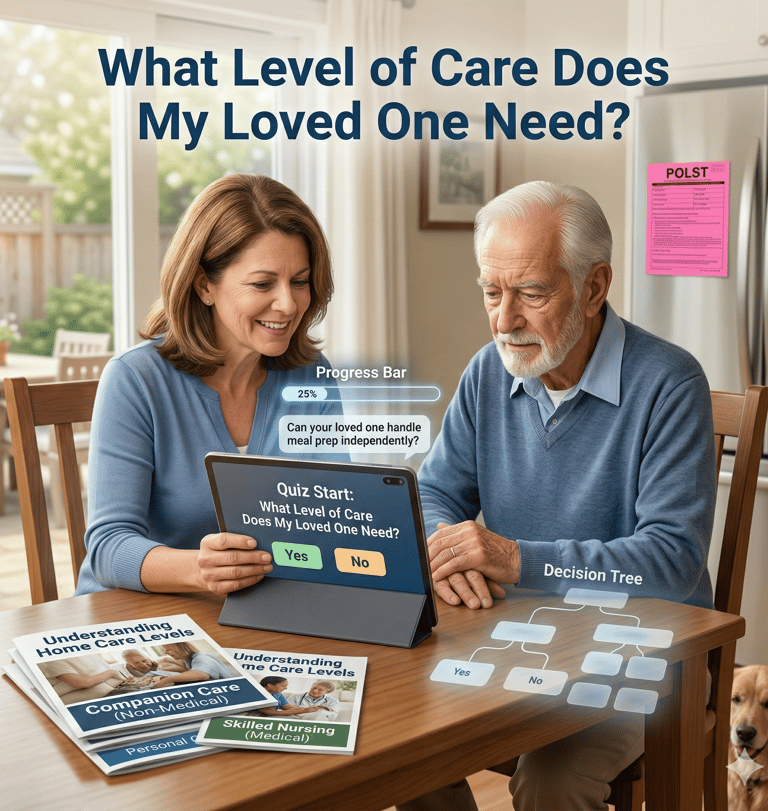
Quiz: What Level of Care Does My Loved One Need?
A 2-minute guide to finding the right support in the Bay Area.
Instructions:
Please answer the following questions based on your loved one's current daily life. Select the option that most closely reflects their situation over the past 30 days.
Daily Independence
How well does your loved one manage basic tasks like bathing, dressing, or preparing meals?
A) Completely independent; they handle everything themselves.
B) Mostly independent but forgets meals or struggles with buttons/zippers occasionally.
C) Requires regular help with bathing, dressing, or using the restroom safely.
Health and Medical Needs
Is your loved one currently managing a specific medical condition or recovering from a procedure?
A) No major health issues; mostly just "slowing down" with age.
B) Managing a chronic condition (like Diabetes or Hypertension) but follows their doctor's plan.
C) Recovering from surgery, has a non-healing wound, or requires medical injections/therapy.
Safety and Mobility
How steady is your loved one on their feet?
A) Walks fine without help; stays active.
B) Uses a cane or walker; has a "fear of falling" in the bathroom or on stairs.
C) Has had a fall in the last 6 months or requires a wheelchair/significant help to move.
Memory and Cognitive Health
Have you noticed changes in their memory or behavior?
A) Occasional forgetfulness (standard for their age).
B) Forgets appointments, repeats questions, or gets confused about the day of the week.
C) Wanders, forgets to turn off the stove, or no longer recognizes familiar faces.
Social and Emotional Well-being
How is their social life and overall mood?
A) Socially active and maintains a positive outlook.
B) Seems lonely or withdrawn; has stopped attending their usual local activities.
C) Often confused, anxious, or shows signs of depression/withdrawn behavior.
Your Results
Mostly A's: Companion Care / Check-ins
Your loved one is doing well but might benefit from Companion Care.
Recommendation: A few hours a week for social interaction, light housekeeping, and grocery trips can prevent isolation and help them stay independent longer.
Mostly B's: Personal Care / Home Care Agency
Your loved one is showing signs that they need regular, hands-on help.
Recommendation: Non-Medical Home Care from a licensed agency is recommended. A professional caregiver can assist with ADLs (bathing, dressing), medication reminders, and fall prevention to ensure safety in the home.
Mostly C's: Specialized or Medical Home Health
Your loved one has high-level needs that require more intensive support.
Recommendation:
If the needs are medical (wounds, injections), you need Home Health Care (covered by insurance).
If the needs are cognitive (Dementia), you need Specialized Memory Care.
If the needs are physical (24/7 safety), you should look into Live-in Care or a high-acuity agency.