
Shop essentials for Baby-Proofing for Home Safety of Senior Parents
As our parents age, their homes can become hazardous. Learn how to effectively baby-proofing your home with essential tools and tips for home care support. Ensure safety by addressing common risks associated with diminished eyesight and balance.
HOME CARESENIOR-PROOFINGBABY-PROOFINGTIPS FOR CAREGIVERSHOPPING
4/18/20263 min read

1. The Bathroom: Eliminating the Slip-and-Fall Risk
The Problem: The bathroom is statistically the most dangerous room in the house. For seniors, the combination of wet surfaces and the physical exertion required to sit and stand from a low toilet or tub creates a "perfect storm" for falls. Balance is often at its worst in the morning or middle of the night when these rooms are used most.
What you need:
Permanent Grab Bars: Suction-cup bars are notoriously unreliable. You need stainless steel bars that are screwed into the wall studs. Place one vertically at the entry of the shower and one horizontally inside.
Raised Toilet Seats: Standard toilets are often too low, requiring significant leg strength to exit. A raised seat (5 inches) reduces the distance they have to "drop" and provides sturdy handles for leverage.
Non-Slip Adhesive Strips: Standard bath mats can actually cause trips. Adhesive, textured strips applied directly to the tub or shower floor are a much safer alternative.
2. Lighting: Solving "Sundowning" and Nighttime Trips
The Problem: Vision naturally declines with age, particularly depth perception and the ability to see in low light. Many falls happen at 2:00 AM when a parent wakes up disoriented and tries to find the bathroom in the dark. Fumbling for a lamp switch can lead to a loss of balance before the light even comes on.
What you need:
Motion-Activated Night Lights: These solve the problem of "searching for the switch." Place them along the baseboards from the bedroom to the bathroom. They illuminate the floor the moment feet touch the ground.
Smart Lighting Bulbs: You can program these to turn on automatically at sunset or allow your parent to turn on a light using a simple voice command like "Alexa, turn on the hallway."
3. Flooring: Removing the "Invisible" Booby Traps
The Problem: Seniors often develop a "shuffling" gait as balance becomes more precarious. In this state, a beautiful area rug or a loose power cord becomes a major trip hazard. Because their skin is thinner and bones more brittle, a simple trip that a younger person would recover from can lead to a life-changing hip fracture.
What you need:
Double-Sided Rug Tape: If your parent refuses to get rid of their favorite area rugs, you must secure the edges. This tape prevents the corners from curling up, which is the primary cause of trips.
Cord Covers: With more technology comes more wires. Clear the walking paths by using floor cord protectors that stick to the ground and create a smooth, tapered surface.
4. Bedroom & Accessibility: Supporting Independence
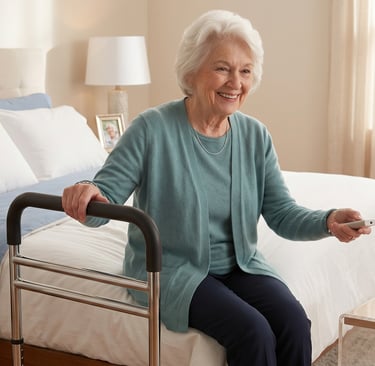
The Problem: The "transfer" phase - moving from lying down to standing up, can cause sudden drops in blood pressure (orthostatic hypotension), leading to dizziness. Without a sturdy object to grab, a parent may grab a nightstand or a lamp, which can tip over.
What you need:
Bed Assist Rails: These slide under the mattress and provide a rock-solid handle. This allows the parent to pull themselves up at their own pace and gives them a steadying point while they wait for any dizziness to pass.
Lever-Style Door Handles: Arthritis can make turning a round doorknob painful or impossible. Replacing these with lever-style handles allows them to open doors with a simple downward nudge.
Summary for Caregivers
Senior-proofing isn't about taking away independence; it’s about providing the infrastructure that allows it to continue. By spending a weekend installing these tools, you are significantly reducing the likelihood of an emergency room visit and providing yourself with the peace of mind that your parents are safe in their own home.