The Big Three: Essential Legal Documents for Home Care
Ensuring your voice is heard when you can no longer speak for yourself. Without the right documents, a simple medical change can turn into a legal crisis, potentially leading to court-ordered conservatorships that cost families thousands. Here is a guide to the three essential documents every Bay Area family should have in place before starting home care.
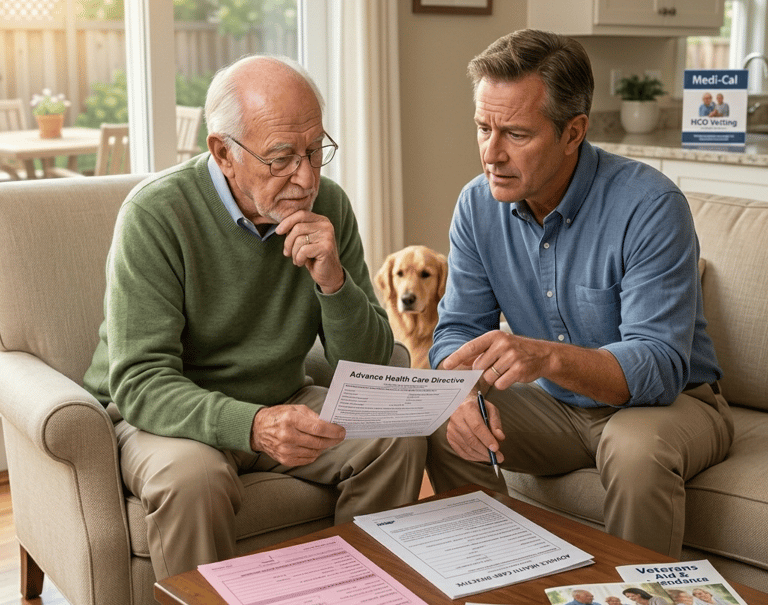
Advance Health Care Directive (AHCD)
In California, the Advance Health Care Directive is the primary legal tool for medical planning. It actually combines two older concepts: the "Living Will" and the "Medical Power of Attorney."
What it does: It allows you to name a Health Care Agent (someone to make decisions for you) and provide specific Health Care Instructions (what you want to happen).
Why it’s needed for home care: If a caregiver notices a change in your condition, they need to know who is legally authorized to give consent for a change in treatment or a hospital transfer.
The "Living Will" part: This specifies your wishes regarding life-sustaining treatment (like ventilators or feeding tubes) if you are terminally ill or permanently unconscious.
Durable Power of Attorney for Finances (DPOA)
While the AHCD covers your body, the Durable Power of Attorney covers your bank account. The word "Durable" is critical—it means the document remains in effect even if you become mentally incapacitated.
What it does: It grants a trusted person (your "agent") the authority to pay your bills, manage your investments, and, most importantly, pay for your home care services.
Why it’s needed for home care: Home care agencies require regular payments. If you develop dementia and haven't appointed a financial agent, your family may be unable to access your funds to pay for the very care you need, forcing them into a slow and expensive court process called "Conservatorship."
Physician Orders for Life-Sustaining Treatment (POLST)
Often confused with a directive, a POLST is a bright pink medical order signed by both you (or your agent) and your doctor.
What it does: It turns your wishes into an actionable medical order that emergency responders (EMTs) must follow.
Why it’s needed for home care: If a caregiver calls 911, paramedics are legally required to perform CPR unless they see a signed POLST or a DNR (Do Not Resuscitate) form. Having this on the refrigerator ensures your end-of-life wishes are honored in an emergency.
Why These Matter for Your Home Care Agency
When you start service with an agency, they will ask for copies of these documents for two reasons:
Compliance: California law requires agencies to ask if you have an AHCD and to document your preferences.
Emergency Protocol: If a crisis occurs at 2:00 AM, the caregiver needs to know exactly who to call and whether to instruct EMTs to provide full intervention or comfort care.
Next Steps for Your Family
Review your documents every 5 years: Or after a "major D" (Decade change, Diagnosis, Divorce, or Death in the family).
Store them "Red-Folder Style": Keep copies in a bright folder near the entrance of your home so caregivers and paramedics can find them instantly.
Talk to your Agent: The best document is useless if your agent doesn't understand your values.