Financial Relief for Family Caregiving in California
Discover essential programs in California and the U.S. that offer financial relief for family caregivers. Learn how to navigate these systems and get compensated for your caregiving efforts while focusing on your loved ones.
CAREGIVERHOME CAREFAMILY MEMBER
4/24/20262 min read
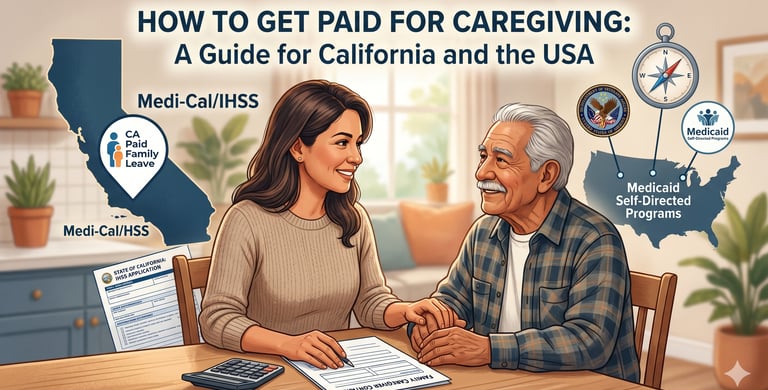
The "sandwich generation"—those caring for aging parents while raising children—is growing. If you have stepped away from your career to care for a family member, you may be eligible for compensation through state or federal programs.
Programs Specific to California
California is one of the most progressive states regarding caregiver support. There are two primary avenues for payment:
In-Home Supportive Services (IHSS)
The IHSS program is the most common way Californians get paid to care for family. It is a Medi-Cal (California's Medicaid) program that pays for services provided to low-income elderly, blind, or disabled individuals so they can remain safely in their own homes.
How it works: The person receiving care must be eligible for Medi-Cal. Once approved, the state "hires" a provider. As a family member, you can be that provider.
The Pay: Hourly rates vary by county but generally align with or exceed the local minimum wage.
California Paid Family Leave (PFL)
If you need to take a short-term break from your job to care for a seriously ill family member, California offers Paid Family Leave.
Duration: Up to 8 weeks of partial wage replacement.
Eligibility: You must have contributed to the State Disability Insurance (SDI) fund through payroll deductions in the past 18 months.
Options Available Across the USA
If you live outside of California, or if your family member does not qualify for Medi-Cal, there are federal and employer-based options.
Medicaid "Self-Directed" Programs
Most states now have "Consumer-Directed" or "Self-Directed" Medicaid programs. This allows the care recipient to receive a monthly budget from the state and use that money to hire whoever they want—including children or spouses.
Search for: "Participant-Directed Services" in your specific state’s Medicaid office.
Veterans Affairs (VA) Benefits
The VA offers some of the most robust support for family caregivers through two main programs:
Program of Comprehensive Assistance for Family Caregivers (PCAFC): Provides a monthly stipend, access to health insurance, and mental health counseling for those caring for a veteran with a serious service-connected injury.
Veteran Directed Care: Similar to Medicaid self-direction, this gives veterans a budget to manage their own care, which can include paying a family member.
Long-Term Care Insurance
Check if your family member has a private long-term care insurance policy. Some "indemnity" policies pay a daily benefit directly to the insured, which they can then use to pay you for care. Other policies specifically allow for "informal" or family caregivers.
Creating a Personal Care Agreement
Regardless of which state you live in, if a family member has the private means to pay you, it is vital to create a Personal Care Agreement (or Family Caregiver Contract).
A formal contract is important for several reasons:
Tax Clarity: It defines the payment as wages rather than a "gift."
Medicaid Planning: If your loved one eventually needs to apply for a nursing home, Medicaid will look back at their spending. Without a contract, payments to you might be viewed as "giving away assets" to qualify for help, which can trigger a penalty period.
Family Harmony: It clearly outlines your duties (grocery shopping, bathing, medication management) and your rate of pay, preventing disputes with siblings or other relatives.
Tax Implications
When you are paid to be a caregiver, the IRS generally views this as taxable income.
Exception: Under IRS Notice 2014-7, "difficulty of care" payments (often those coming through Medicaid/IHSS programs where the caregiver lives with the recipient) may be excludable from federal gross income.
Consult a Professional: Always speak with a tax professional to see if your caregiving income is exempt from federal or state taxes.