Fund Home Care: Exploring Reverse Mortgages
Choosing the right way to fund home care for a loved one is crucial. Learn how a reverse mortgage can help cover the costs of private pay home care services, alongside traditional options like insurance and savings.
REVERSE MORTGAGEFUNDINGHOME CARE
3/21/20262 min read
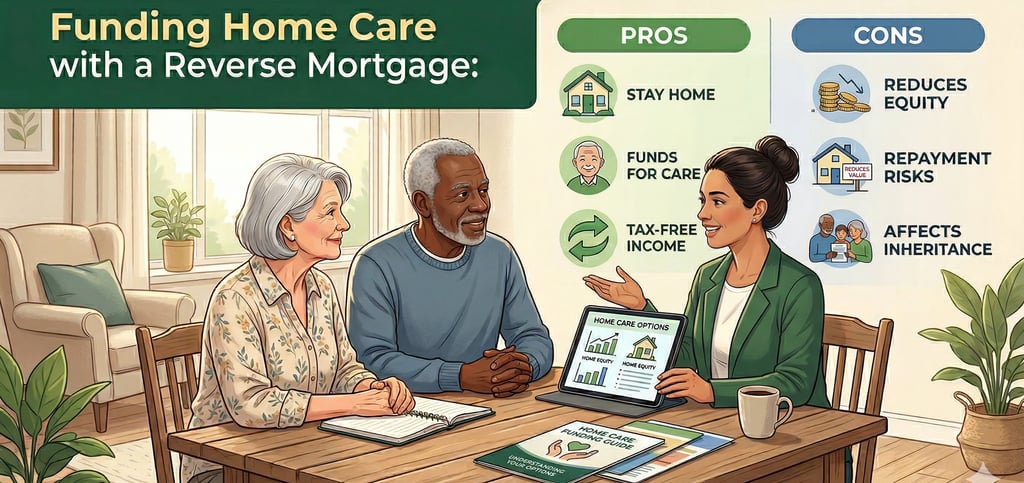
A reverse mortgage is a financial tool that allows homeowners aged 62 or older to borrow against their home equity without having to make monthly mortgage payments. Instead, the loan balance is repaid when the homeowner moves, sells the home, or passes away.
Before deciding if a reverse mortgage is right for your family, it's essential to weigh the potential advantages and disadvantages carefully.
Pros of Using a Reverse Mortgage to Fund Home Care
Supplement or Cover Home Care Costs: For families facing substantial private pay home care expenses, a reverse mortgage can provide a significant source of income to help cover these costs.
No Monthly Mortgage Payments: Unlike a traditional home equity loan, a reverse mortgage does not require regular principal and interest payments. This can free up cash flow for other essential expenses.
Potential Tax Benefits: The funds from a reverse mortgage are typically tax-free.
Flexibility in How Funds Are Used: Reverse mortgage proceeds can be used for various purposes, including paying for home modifications, medical expenses, and daily living costs.
Ability to Stay in Your Home: A key benefit of a reverse mortgage is that it allows homeowners to continue living in their own homes, which is often a top priority for many seniors.
Cons of Using a Reverse Mortgage to Fund Home Care
Reduced Equity in Your Home: Over time, the loan balance increases as interest and fees accumulate. This can reduce the amount of equity remaining in the home.
Impact on Inheritances: Because the reverse mortgage loan is repaid when the home is sold or the homeowner passes away, there may be less equity available to heirs.
Complexity and Fees: Reverse mortgages involve fees and closing costs, which can be significant. It's crucial to understand these costs before proceeding.
Requirement to Stay in Your Home: To keep a reverse mortgage, the homeowner must live in the property as their primary residence. If you move out or pass away, the loan must be repaid.
Potential for Foreclosure: If the loan balance exceeds the home's value, or if you fail to meet other loan obligations (such as paying property taxes and insurance), the lender could foreclose on the property.
Important Considerations Before Choosing a Reverse Mortgage
Speak with a Financial Advisor: It's highly recommended to consult with a qualified financial advisor to understand the long-term financial implications and assess whether a reverse mortgage is the right choice for your specific situation.
Understand all Costs and Fees: Be sure to fully understand all costs associated with a reverse mortgage, including upfront fees and ongoing interest.
Explore Other Funding Options: Consider all your options for funding home care, including other financial tools, insurance, and government assistance programs.
Consult with an Elder Law Attorney: An elder law attorney can provide guidance on how a reverse mortgage may affect your overall estate planning.
Whether or not a reverse mortgage is a good fit for you depends on your individual circumstances. While it can provide needed financial support for home care, it's essential to carefully evaluate the potential risks and long-term consequences.
Before making any decisions, take the time to research, compare options, and seek professional advice. By doing so, you can make an informed choice that best meets your needs and financial goals.